mercredi 28 février 2018

HyperX Cloud Revolver S review

Kingston’s HyperX Cloud Revolver S headphones take the standard Cloud Revolver headset and gives it a few tweaks to make it’s sound stage more versatile for gaming, music and video entertainment.
Thanks to Dolby digital signal processing that creates virtual 7.1-channel surround sound, the Cloud Revolver S headset joins the leagues of other premium gaming headsets aimed at full immersion and complete situational awareness. 
However, competitors like the $99 (£109, AU$159) Corsair Void Pro RGB and the $99 (£89,AU$169) Creative Sound BlasterX H7 Tournament Edition also offer game-oriented 7.1-channel surround at a lower price tag, so the HyperX headset has something to prove at $149 (£139, AU$249).
As we’ll explore, aside from a few minor gripes, the HyperX Cloud Revolver S headset truly proves itself in every way we could think to challenge it.

Design

The aesthetic of the HyperX Cloud Revolver S is pretty and not overly “gamery.” A few points hint at its gaming nature, but they’re subtle. With the microphone removed, only the “HX” logo indicating HyperX on both ear cups really shouts “gaming.” 
The black and white color scheme isn’t dramatic, with black being most prominent and white only showing up as minor accents on the ear cups and threaded into the headband. Red LEDs, meanwhile, only make an appearance on the USB control box, and they aren’t glaring.
The HyperX Cloud Revolver S physical build is even more impressive. The headset is built around a smooth, steel frame that’s pleasing to the touch and the eyes. This offers a flexible and robust feel. Usually metal frames can introduce a bit of noise if brushed or tapped, but a pair of rubber dampers help minimize the reverberation. Matte plastic ear cups attach to the steel frame and pivot a few degrees in every direction and the headband slides freely for automatic adjustment to fit a user’s head.
The headband and earpads are covered in leather-like “leatherette” pads full of lush memory foam that offer comfort for hours on end and justify the use of “Cloud” in the headset’s name. We’ve worn plenty of lighter headsets and headphones that felt infinitely more uncomfortable. The earpads make a wide loop, to comfortably fit large ears and spread out the clamping pressure to the point of being negligible. 
The microphone is one of the few weak points in the design. It plugs into the HyperX Cloud Revolver S via a 3.5mm jack at the bottom of the left headphone. It’s thick, bendable, and feels durable with no exposed mesh to worry about ripping. . 
The issue is that it likes to rebound a bit from where it’s positioned if it’s bent very far. It’s not like a contortionist that will bend and stay in whatever position you put it. It’s also a shame the microphone can’t dock itself into the headset when not in use, but the added bulk probably would not have been worth it.
The HyperX Cloud Revolver S is designed with varied functionality and compatibility well considered. It can connect to PC, PS4, PS4 Pro and other devices that support USB sound using the included USB dongle. A simple 3-pole 3.5mm jack also lets it plug into almost any other device from a humble phone to a beefy Xbox One X or VR headset. 
If needed, a breakout cable even comes packed in the box to split the microphone and headphone audio into dual 3.5mm jacks. It should be noted that the magic of the Dolby virtual surround will be lost with options that don’t use the USB connection.
The HyperX Cloud Revolver S uses braided cables that are somewhat rigid. From the headphones, the first length of cable is about three feet, which is a manageable length to reach the USB control panel. The panel has a clip on it that seems intended for attaching to a pocket or belt. 
From there, the cable gets a bit insane at roughly eight feet in length. If you’re close to your computer, the cable can feel excessive. But, since it’s compatible with consoles where you might be sitting further away, having the extra reach and not needing it is better than not having it when needed.

Sound garden

If you think we haven’t gushed enough about the design of the headset, don’t worry. The HyperX Cloud Revolver S performance is similarly laudable.
Setup is simple. Kingston says “Plug N Play” and the HyperX Cloud Revolver S are just that. No hunt for drivers, no required software to manage sound profiles. We plugged the USB device in, punched the button on the dongle to activate Dolby’s digital signal processor, and boom, we were set.
The 50mm drivers pack a punch while keeping sound clarity intact. We cranked up games to the point where explosions were more than a little jarring, and everything still sounded crisp and clean. The HyperX Cloud Revolver S doesn’t muddle high hats or bass lines, and produces clean mid-tones.
The Dolby DSP introduces some noise, but the noise-to-signal ratio is good, and the interference  is quickly covered up. The only times we really noticed it was listening to music that started quiet, with little more than a single note played at a time.
On the note of music, the HyperX Cloud Revolver S is quirky but fun. With everything set to normal, the headphones are fine for music. The in-line control panel offers three equalizer presets: a bass boost and a flat or vocal EQ. The bass is nice enough, but we didn’t find much use for the flat and vocal EQ options. We did, however, try kicking on the Dolby DSP while listening to music, and it was a blast.
The Dolby digital signal processing may introduce noise, but it also spreads out all the elements in the song, so you feel surrounded by them, lending an almost live feel. Al, John and Paco sounded like they were sitting around us franticly picking and tapping their guitars. Of Montreal’s Kevin Barnes shouting, “come on, chemicals,” from all around was amazing. 

Performance

Of course, all of that is just icing on the cake. Video game performance is what it’s all about, and the HyperX Cloud Revolver S doesn’t disappoint. To put it bluntly, no, the virtual 7.1-channel surround sound didn’t make it possible for us to precisely pinpoint a footstep at our 8 o’clock so we could whirl around and surprise sneaky adversaries with a quick headshot. But, it still offers solid spatial sound that can help immensely in games. 
Because the Dolby DSP does such a good job of spreading out sounds, it’s easy to distinguish sounds even in clamorous environments. We were defending the end of King’s Row in Overwatch, and though the payload was nearby and busy with combat, we could head the loud footsteps of an enemy Reaper, get a general idea of where he was (sure enough, he was lurking on the balcony above), and we could warn our teammates in time to avoid a nasty surprise.
We also tested the HyperX Cloud Revolver S in Rainbow Six Siege and Battlefield One. In Rainbow Six, sound cues can go a long way to staying alive and winning the game, and the HyperX Cloud Revolver S was no slouch at keeping us aware of our surroundings. In Battlefield One, the surround sound helped pull us into the environment, making us feel like we were that much deeper in the mud with snipers popping shots from the tower on our right, and some jerk tossing flame grenades up ahead of us.
The microphone, despite its finicky flexibility, is a solid choice for gaming. Kingston boasts its TeamSpeak and Discord certification, and we were pleased with it, too. None of our teammates ever barked, “your mic is cancer,” while playing with us. The noise-cancelling proved effective in a bevy of tests. In our worst test environment, a noisy cafe with music on, most of the sound was reduced, with only the occasional sound of clinking glass coming through. 
Background noise was easily overpowered by our own voice in the microphone. There’s definitely a sweet spot for the mic though. Too close and your breath will sound like a strong gust. Too far and it goes faint. Serious gamers or streamers with a dedicated microphone can take the microphone off and forget about it (or find some other use for it).

Final verdict

Advertisement
The HyperX Cloud Revolver S is an all around impressive headset geared for gaming but ready to do so much more. The 7.1-channel surround sound offered through the Dolby DSP creates a wide soundstage that’s useful in games and immerses you in movies and music. All the while, the sound quality dazzles all the way from bass through to treble.
Beyond the sound, the headset’s build stands out as a premium feature that helps justify the slightly higher price. Metal, rubberized plastic, faux leather and memory foam all come together into a comfortable and robust headset that doesn’t feel cheap anywhere. And did we mention the comfort? Ten hours of gaming on a lazy Saturday is too easy to do with the HyperX Cloud Revolver S.
Sure, the microphone isn’t the most flexible or easy to stow away we’ve ever used, but the sound is crisp and handles the job of keeping teammates informed in competitive games. And, yes, the price is a bit higher than plenty of other headsets offering 7.1-channel surround, but when it comes to the whole package, the HyperX Cloud Revolver S is easily worth every cent.

Share:

Samsung Galaxy S9 release date, price, news and features


The Samsung Galaxy S9 is official, making its landing at MWC 2018 alongside the Galaxy S9 Plus, which ran with our coveted "Best in Show" award. 
We're currently in the process of reviewing both of these feature-packed phones. But in the meantime, there's plenty of info to check out below a guide to everything you need to know about the smaller flagship phone. That includes the spec, design, release date, the latest on pricing and much, much more.
Since the S9 was first announced, we've learned a lot about it, including that supports Project Treble out of the box, which will lead to faster updates to major Android releases, like Android P. Also, DisplayMate shared that it has the best screen it has ever tested.
Additionally, we've got photos of the handset so you can see what it looks like, and we break down the key new features, including the new and improved rear camera, AR Emoji on the front camera and improvements to Samsung's Bixby virtual assistant.
Scroll down to get a full picture of what the phone looks like, split across various categories.
AMSUNG GALAXY S9 SPECS
Display resolution: QHD+ (1440 x 2960)
Display size: 5.8-inch, 18.5:9 ratio
Display tech: Super AMOLED
Chipset: Exynos 9810/Snapdragon 845
RAM: 4GB
Storage: 64GB
Rear camera: 12MP
Front camera: 8MP
Battery: 3,000mAh
Software: Android 8 Oreo


What's the latest Samsung Galaxy S9 news?

We've recently learned that the Samsung Galaxy S9 will support Project Treble, meaning that it's likely to be among the first Android smartphones to be updated to Android P and any subsequent updates.

What is the Samsung Galaxy S9 price?

We know the Galaxy S9 will cost £739, $719.99, or AU$1,199 SIM-free directly from Samsung, but exact pricing for other markets is currently unclear. In the UK, that's a huge price jump over last year's handset, which cost £689 at launch, and it's the same price as the reports our sources told us before it was made official.

What's the Samsung Galaxy S9 release date?

The Samsung Galaxy S9 launch date is today (February 25) and the phone will be up for pre-order in the next few hours or days depending on where you live. You'll be able to get the phone in your hands from March 16.

Samsung Galaxy S9 release date

  • Samsung Galaxy S9 was announced on stage at MWC 2018
  • Galaxy S9 pre-orders open now in Europe, March 1 in the US
  • Galaxy S9 release date set for March 16
The Samsung Galaxy S9 was officially unveiled on stage at MWC 2018, but it won't be on shop shelves just yet.
If you want to buy the Galaxy S9, you'll be able to pre-order it from 7PM GMT on February 25 in the UK – that's right after the launch event. Those in the US have to wait until March 1 for pre-orders to open, and we've yet to learn about the timing for the rest of the world.
As for when you'll actually get the phone, the Galaxy S9 release date is set for March 16 globally. You may want to pre-order to ensure you get your device on that date, but everyone will be able to buy it from March 16 2018. But how much is it going to set you back?

Samsung Galaxy S9 price

  • Official SIM free price set at £739 / $719.99 / AU$1,199 if you buy from Samsung
  • Further pricing is set to follow, and we'll update when we know more
Samsung has confirmed the price of the Galaxy S9 in the UK at £739, $719.99 in the US and AU$1,199 in Australia.
In the UK, we've only currently heard of contract pricing from EE. Deals there start at £53 a month with an upfront cost of £150. That gets you 4GB of data every month as well as unlimited minutes and texts.
In the UK, it's a 7% price increase over last year, but a massive 25% bump from the price of the Galaxy S7.
We also don't know any specific US or UK contract pricing yet, but we'll be sure to update here when we hear from the major networks and carriers on both sides of the Atlantic.

Samsung Galaxy S9 screen

  • Smaller upper and lower bezels than the Galaxy S8
  • A 5.8-inch QHD+ screen with 567 pixels per inch
  • Same Infinity Display design we've seen on Galaxy S8 and Note 8
The Samsung Galaxy S9 doesn't offer any major improvements over the display on the Galaxy S8 – there's sadly no in-screen fingerprint scanner here, like on the Vivo X20 Plus UD – but it still offers some high-end specs.

 It's a 5.8-inch QHD+ Super AMOLED display with a resolution of 1440 x 2960. That equals 567 pixels per inch, which should allow for a super-crisp and clear picture for the high-end flagship device.
Again it has a screen ratio of 18.5:9, with slightly slimmer bezels at the top and bottom of the screen to allow for the same size screen in a smaller body than the Galaxy S8.
DisplayMate has shared its research with TechRadar, which states that the screen inside of the S9 isn't just the best display in a phone, it's probably better than any screen you own in your living quarters.

Samsung Galaxy S9 design

  • Largely similar design to the Galaxy S8
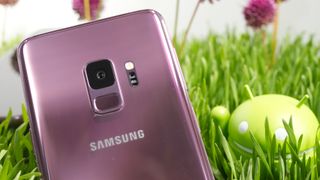
  • A repositioned fingerprint scanner below the rear camera
  • The headphone jack remains
If you know the Infinity Display design of the Galaxy S8, you'll recognize a lot of what the Galaxy S9 is trying to do. There aren't any major differences, but instead Samsung has opted to try and improve things with a few slight tweaks.
There's still a glass back, a rounded display on the front and slim bezels, with the aim of merging the screen almost seamlessly with the body of the handset.
Samsung claims the design improvements for the phone include the iris scanner hole being hidden, as well as less bezel at the top and bottom of the display.


The screen is now also a touch darker when off, with Samsung presumably thinking this will obscure the lines that bit more between the body and the display, to make the S9 look even more futuristic than past devices.
One of our biggest criticisms of the Galaxy S8 was the strange placement of the fingerprint scanner on the rear of the phone right next to the camera, and Samsung has moved the sensor on this phone.
Now it sits below the camera, and there's quite a distance between the two, so you won't mistakenly put your fingers all over the shooter.
Unlike on some rival products, there's still a 3.5mm headphone jack on the Samsung Galaxy S9, on the bottom edge of the phone on the left-hand side. Next to that sits the USB-C slot for charging and data transfer, and one of the phone's two speakers.
The other speaker is on the top of the phone, and Samsung says these new speakers will allow the S9 to be 1.5 times louder than the Galaxy S8. If audio is a big deal for you, you'll be pleased to hear the phone also features Dolby ATMOS surround sound technology.
If you get this phone wet, don't panic, as Samsung has opted for IP68 waterproofing, so the Galaxy S9 can handle the odd drop in a puddle without immediately flooding the internals.
As for color options, you'll be able to buy the phone in Midnight Black, Coral Blue and Lilac Purple in most territories. Those in the US or UK won't get the Titanium Gray version, but some other countries will.

Samsung Galaxy S9 camera

  • Samsung claims this phone will 'reimagine' the camera
  • A single-lens camera with variable aperture, unlike Galaxy S9 Plus
  • Super-slow-motion video as well as added animated emoji features
The Galaxy S9 only features a single lens on the rear of the phone, but Samsung has packed in lots of improvements in its effort to 'reimagine' the phone camera.
There's a 12MP rear sensor with optical image stabilization, and a lot of the other features we've come to expect from high-end Samsung devices.
One of the biggest upgrades is new dual-aperture technology, with the camera automatically adjusting the aperture depending on the scene you're shooting, much like the human eye adapts to changing light.

So if you're shooting something brighter than 100 lux (which is usually daylight) it'll automatically adjust to f/2.4 aperture, and if it's darker than that the camera will opt for the f/1.5 aperture.
F/1.5 is the widest ever aperture in a smartphone, and Samsung claims it should enable you to capture images with more color and detail, and much less noise in low light conditions.
The slow-mo features of the rear shooter have also been improved so you can now shoot at 960 frames per second, which is four times slower than the Galaxy S8 and meets the industry standard set by Sony phones.
This mode also uses something called automatic motion detect, which will automatically begin to record when the camera detects movement, so it should make it easier to only record the relevant moments in slow motion.
On the front of the phone there's an 8MP shooter with an f/1.7 aperture. This camera also plays into the facial recognition technology you can read about in the other features section at the bottom of this page.

Samsung Galaxy S9 battery

  • A 3,000mAh battery
  • Improved power efficiency
Much like the Galaxy S8, there's a 3,000mAh cell inside the Galaxy S9 to power it along on a daily basis. Exactly how long this will last is currently unclear, but it's expected that the new processing tech inside both versions of the phone will make it a touch more efficient than the Galaxy S8 was.
There's wireless charging technology here again too, so you'll be able to use a variety of different pads to charge up your phone without plugging it in. Plus there's fast charging on offer here as well, but you'll need to use the official charger to get the full power into your phone in the minimum amount of time.

Samsung Galaxy S9 specs and power

  • Some markets get one with the Qualcomm Snapdragon 845
  • Others will have Samsung's own Exynos 9810 chipset inside
  • Just 4GB of RAM in all versions of the Galaxy S9
This is the chance for Samsung to show off its top processing power inside the Galaxy S9. For that opportunity the company has opted to follow a similar scheme to recent years where different countries get different chipsets.
If you live in the US, you'll get a version of the phone packing a Qualcomm Snapdragon 845 chipset, and the S9 is set to be one of the first phones to get this technology from Qualcomm.
Those in the UK (and a lot of other markets) are set to get a version of the phone packing the Exynos 9810 chipset, which is created in-house at Samsung.
Exactly which version of the phone will be more powerful remains to be seen, but if it's like recent years both versions of the phones will be a similar level when it comes to raw processing power.
There's also only 4GB of RAM in each version of the phone, for 6GB you'll have to opt for the Galaxy S9 Plus. As for storage, the Galaxy S9 only comes with 64GB of onboard space, but you can add in microSD cards for up to 256GB of extra space.

Samsung Galaxy S9 other features

  • AR on the front camera for Animoji-like features
  • Bixby Vision improvements to the personal assistant
Advertisement
Samsung says it believes people are communicating more with images than ever before, so it has made its own feature called AR emoji. AR stands for augmented reality and this feature uses the front camera to take a selfie and make an emoji based on your looks.
It works in a similar way to The Sims, where you make an image that represents you and can be customized. It uses facial recognition and can recognize over 18 different expressions.
It's a similar idea to the Animoji feature available on the iPhone X, but this allows you to make your own character and give it different hair colors, dress senses, 12 different clothing options and choose from 7 pairs of glasses.
You can move your face to make silly videos, but you can also choose one of 18 different emotions pre-built into the app so you don't always need to pull a stupid face into your phone to be able to send one.
Samsung is also bringing big improvements to its Bixby Vision project too. When you're in the camera app you can tap the Bixby option to access a variety of different new features, including tracking the place you're in (it provides the name and details of where you are) or pointing it at food, at which point it will try to work out what it is and even estimate the calories.
There's another feature called Live Translation that allows you to put the camera over a menu or text and auto translate it. You'll need an internet connection and to wait a few moments for this to work, but it's an interesting addition that may come in useful when you're traveling.
Plus, Bixby Vision offers an enhanced beauty mode, so you can change the look of your selfies too.
MWC (Mobile World Congress) is the world's largest exhibition for the mobile industry, stuffed full of the newest phones, tablets, wearables and more. TechRadar is reporting live from Barcelona all week to bring you the very latest from the show floor. Head to our dedicated MWC 2018 hub to see all the new releases, along with TechRadar's world-class analysis and buying advice about your next phone.
Share:

Like us on Facebook